
Physics-informed ML for battery voltage prediction
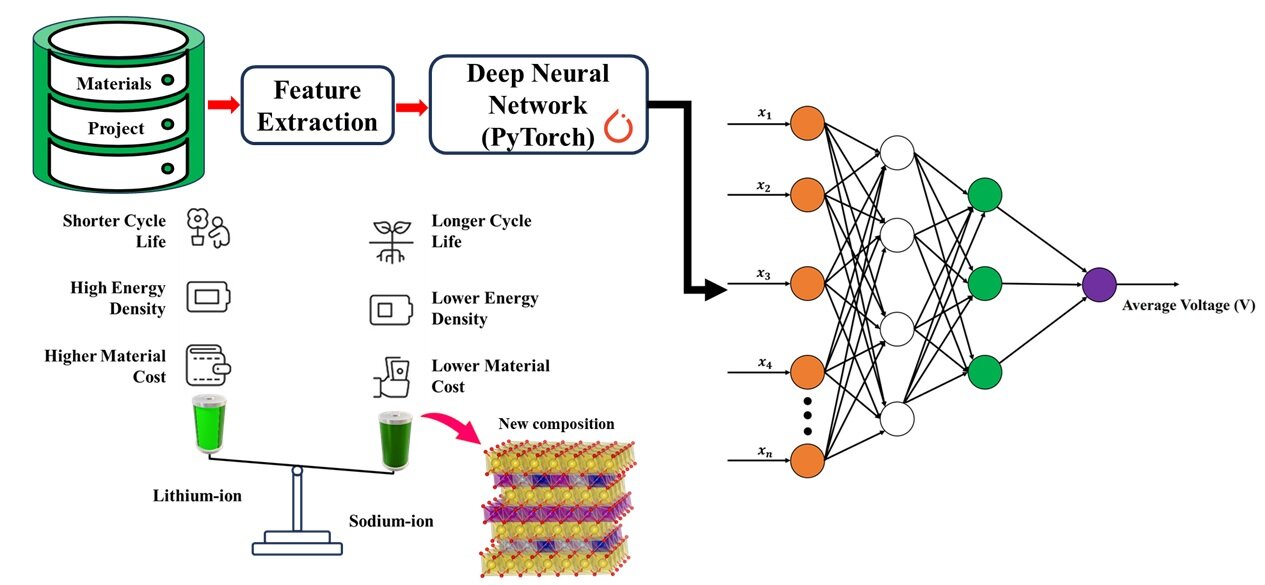
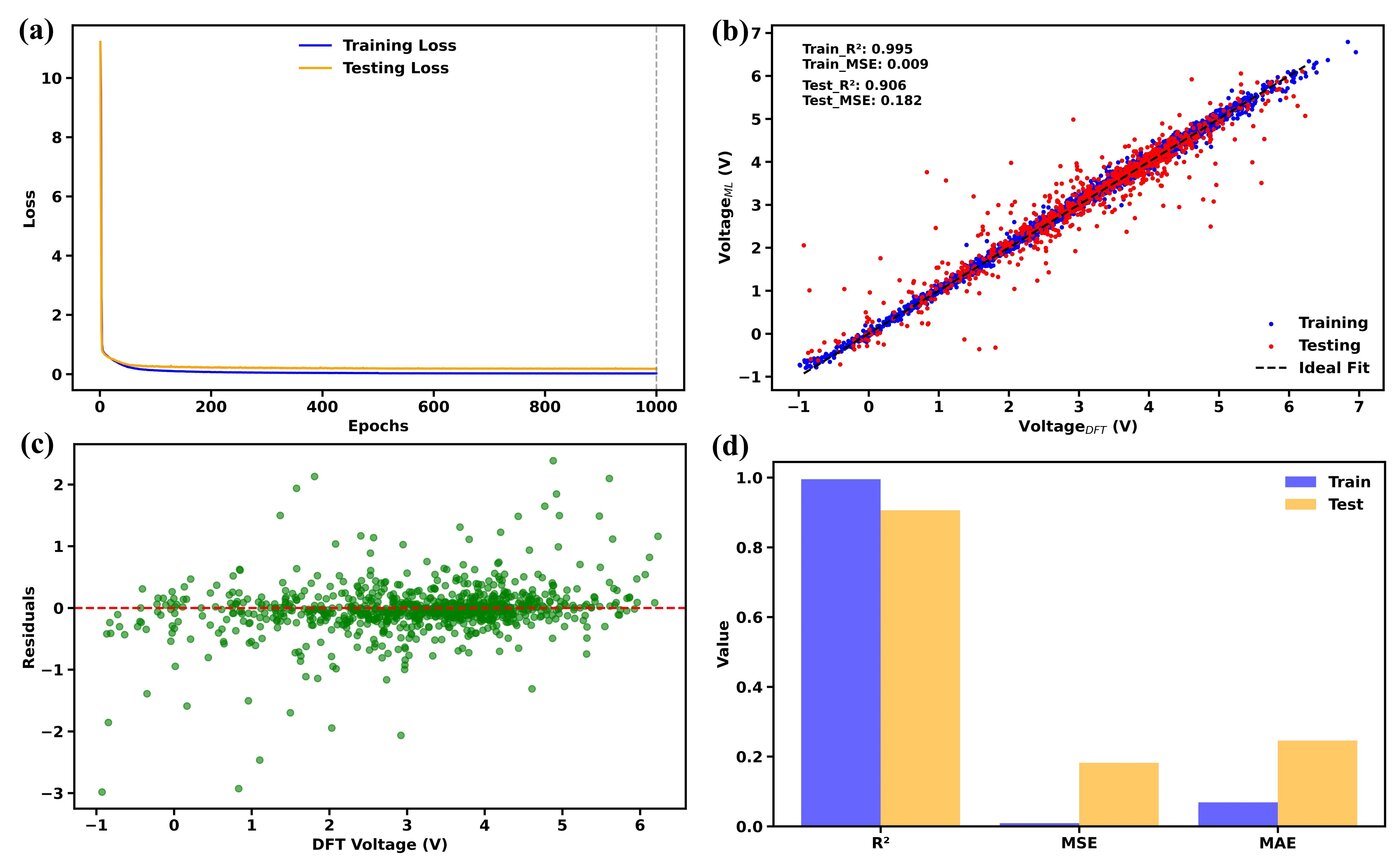
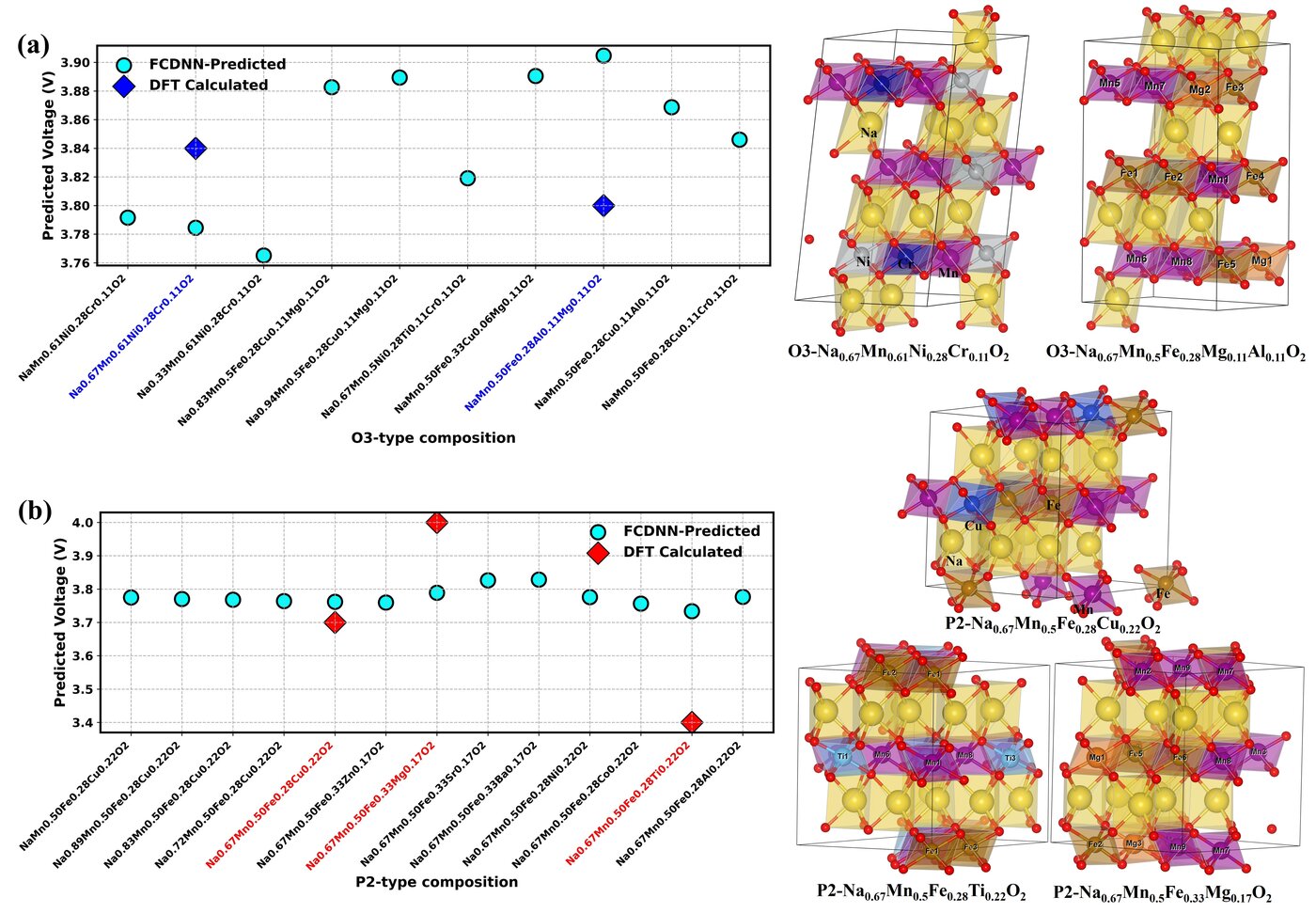
End-to-end machine-learning pipeline for predicting average voltages of alkali-ion battery cathode materials, combining DFT-derived physicochemical descriptors with neural network models.
Representative systems and tools illustrating my approach to integrating first-principles simulation, machine learning, and quantum algorithms into reproducible research pipelines.
End-to-end machine-learning pipeline for predicting average voltages of alkali-ion battery cathode materials, combining DFT-derived physicochemical descriptors with neural network models.
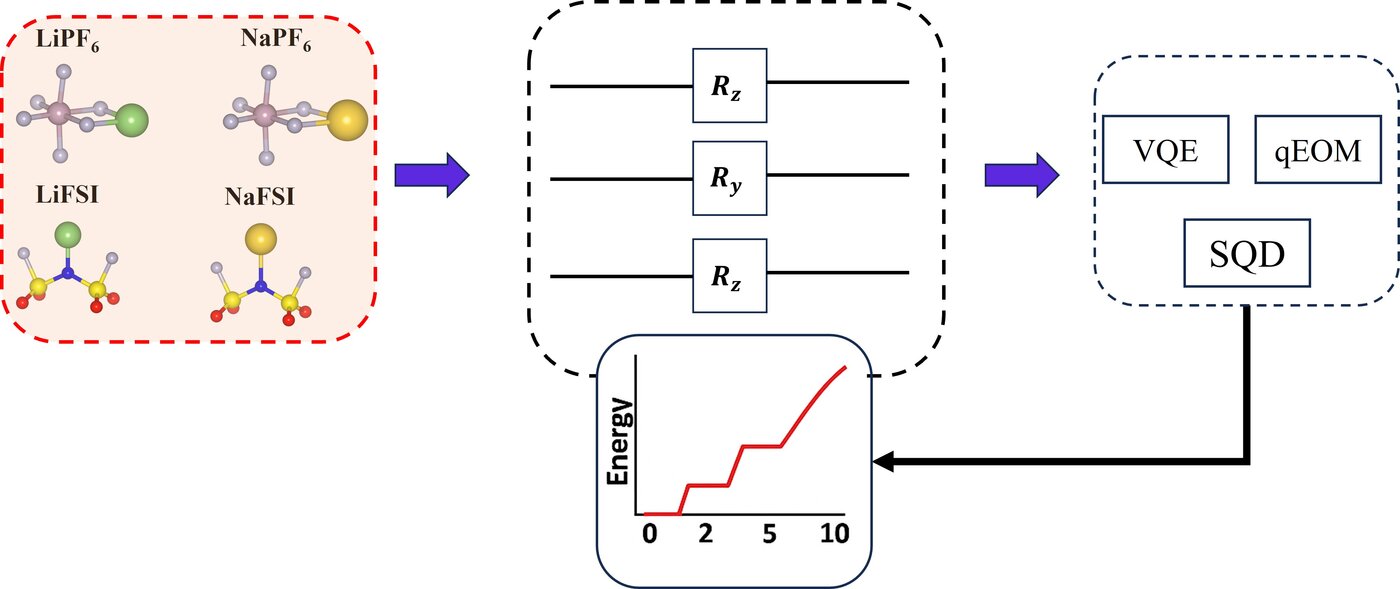
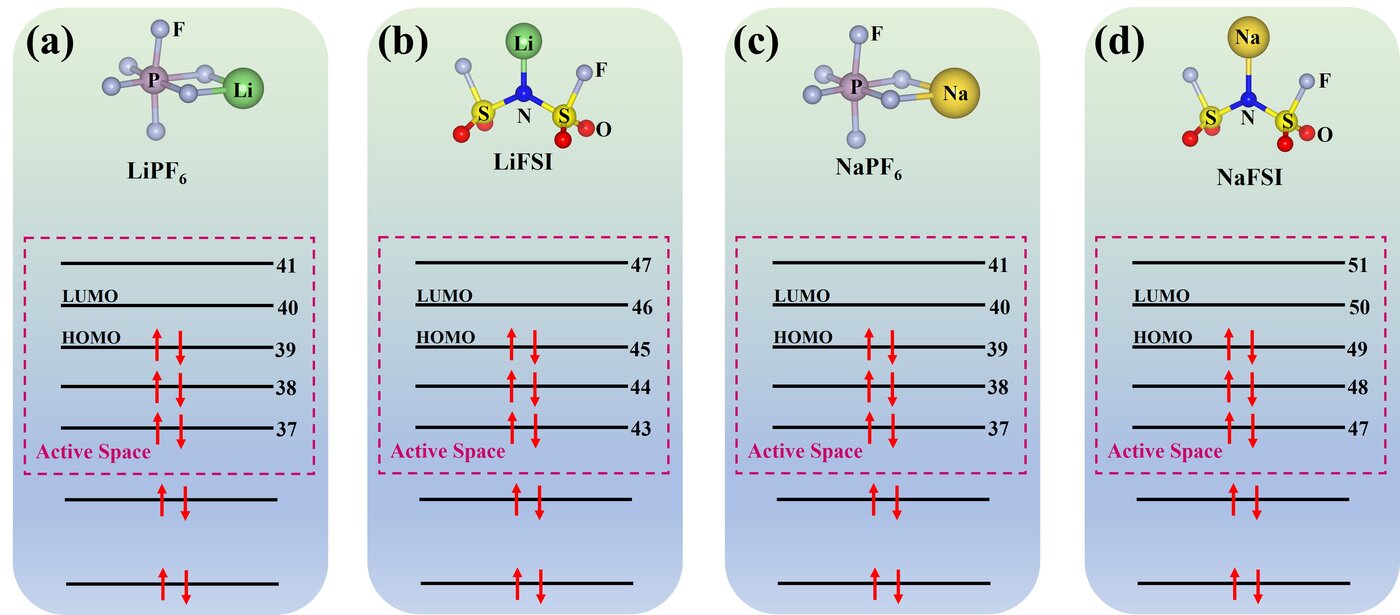
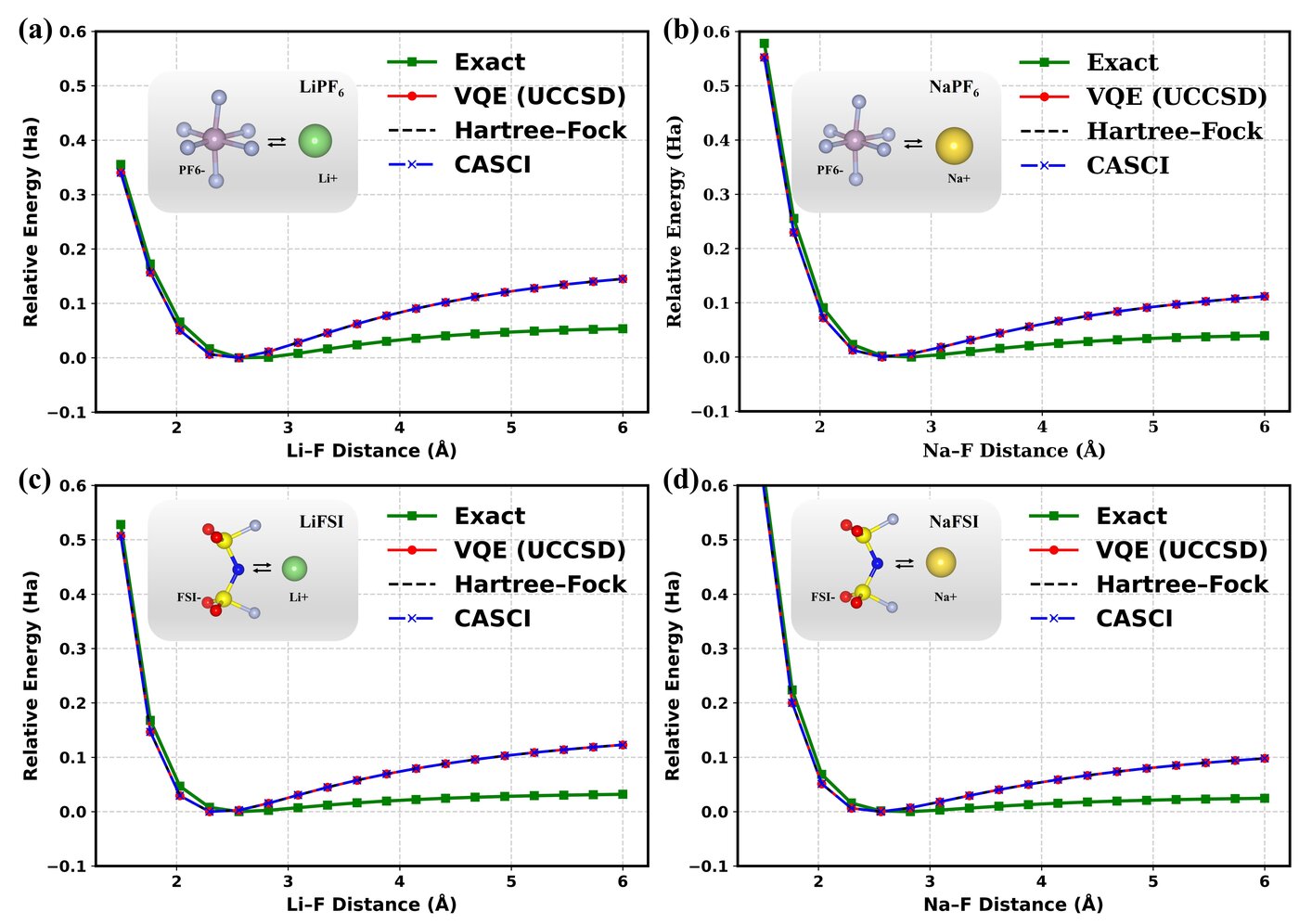
Reproducible quantum computing workflows for quantum chemistry simulations, focusing on reliable ground- and excited-state calculations for realistic molecular systems. The work emphasizes benchmarking, validation, and method development for problems relevant to areas such as energy storage, molecular design, and drug discovery, with particular attention to accuracy, scalability, and computational efficiency.
Modular toolkit for automating density-functional theory workflows, including output parsing, convergence diagnostics, and generation of publication-ready figures.
Designed to support large-scale studies and to serve as a reliable data-generation backend for machine-learning and quantum simulation tasks.
Development of quantum algorithms for resolving eigenvalues with exponentially small gaps and low spectral weight using filtering-enhanced phase estimation and quantum subspace methods.
This work targets algorithmic scalability and noise robustness, with applications to molecular excitation spectra and correlated quantum systems.
Spectral preconditioning framework for reducing quantum phase estimation (QPE) precision overhead by amplifying effective boundary gaps prior to phase estimation.
Demonstrates exponential circuit-depth compression proportional to \(2^{\Delta m}\), with verified principal-subspace preservation and hardware-level validation across molecular, classical, and near-degenerate synthetic systems.
A research initiative building a cloud-based platform for running VQE, qEOM, and SQD workflows on real molecular systems directly from a browser, paired with a growing benchmark database of results validated against classical electronic-structure methods.
The goal is to turn the reproducible quantum-simulation workflows behind my published research into shared infrastructure that any researcher can use, rather than one-off scripts tied to a single paper.